
KANNEH-MASON RECENTLY ACHIEVED THE LANDMARK OF HALF A BILLION STREAMS
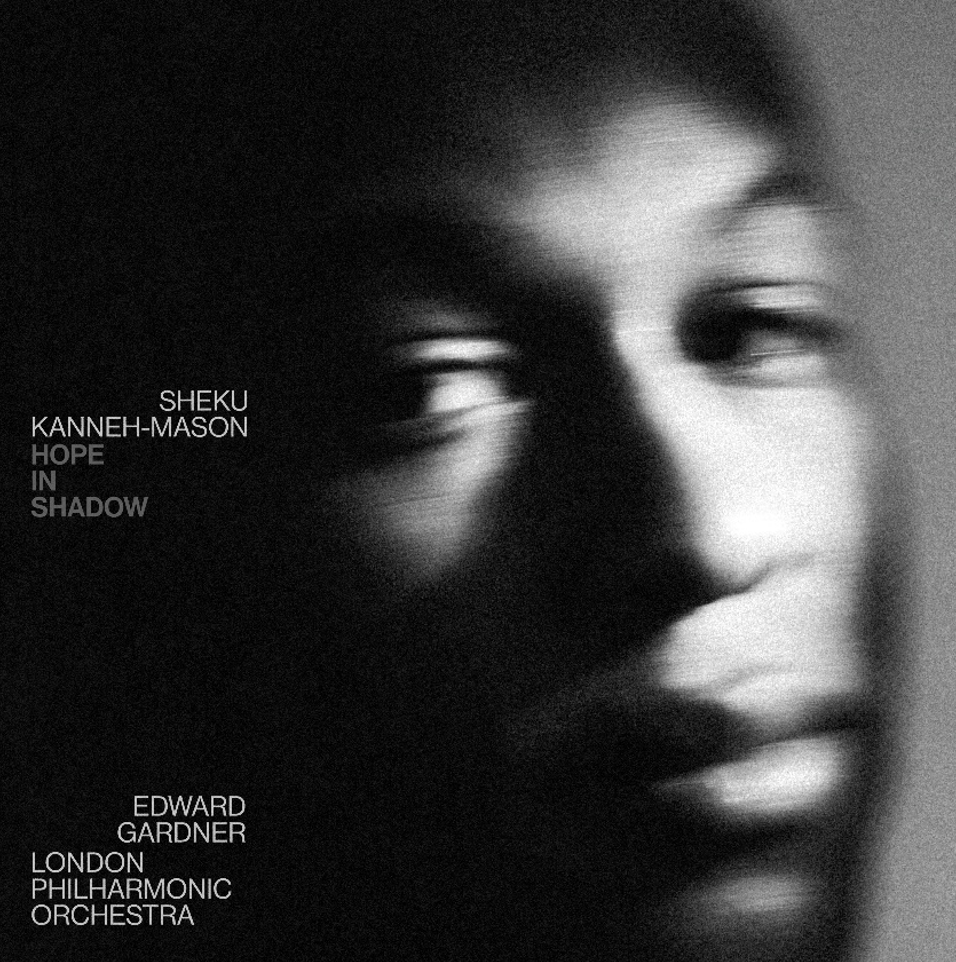
HOPE IN SHADOW
“HOPE COMES IN MANY WAYS, AND I HAVE ALWAYS SOUGHT THOSE GLEAMING MOMENTS FROM THE SHADOWS.”
SHEKU KANNEH-MASON
Released on Decca Classics on 13 November
The first single Theme from Schindler’s List is out today – listen here
28 AUGUST 2026 (TORONTO, ON) — Decca Classics today announces Hope in Shadow, the ninth studio album from internationally acclaimed cellist Sheku Kanneh-Mason. Recorded with Edward Gardner and the London Philharmonic Orchestra, the album features music that brings hope when there are shadows and darkness. It is all music that Sheku has loved for a long time, first as a listener and now as a performer and includes Saint-Saëns’ Cello Concerto No. 1, Bruch’s Kol Nidrei, Bloch’s Schelomo: Rhapsodie Hébraïque, and John Williams’ Theme from Schindler’s List, released today as the first single. The second single will be Ravel’s Kaddish released on 18 September, followed by Bloch’s Prayer on 16 October and the first movement of Saint-Saëns Cello Concerto No 1 on 13 November.
2026 marks a decade since Sheku signed with Decca Classics and won BBC Young Musician. The past ten years have seen Sheku cement his place as one of the world’s leading classical artists and recently achieved the landmark of half a billion streams across digital platforms.
Sheku reflects on Hope in Shadow, “In the musical depths of desperation comes beauty, determination and what feels like a pearl of inspiration out of nowhere. For this album I wanted to gather pieces which contain their own view of Hope in Shadow; in the sound and in their intent. There is a darkness, a sombre and sorrowful quality that
gives way to precious splashes of light. During times which feel so very unstable and affect so many in the world, these works are a small yet powerful outcry to cling to and simply to reflect upon, relate to and perhaps even bring some comfort.”
He continues, “All the works feel as if they stretch the boundaries of sound in extreme and different ways. In embodying the stories the pieces tell, and the multiple characters within the music, we can travel on the paths of extreme suffering and drama, reaching pinnacles of hope through the complexity of the music.”
Saint-Saëns Cello Concerto No 1 has always been one of the composer’s most popular pieces. Written in 1872 it broke with structural concerto convention at the time and is in one continuous movement rather than the usual three. It is a piece that Sheku was drawn to as a child and was one of the first concertos he learned. Sheku comments, “Its story feels so clearly drawn, with such potential as a fantasy in my head with that dramatic opening scene. Plunged immediately into a storm at sea with huge waves all around, thunder and lightning, it’s as if the whole piece is about escaping this, via different means and methods: dream-like elegance, passionate singing and determined virtuosity.” Saint-Saëns’ penultimate movement of his Carnival
of the Animals ‘The Swan’ for Sheku is “…a piece of sheer beauty in amongst others that contain a great deal of darkness. Its appeal never wanes; I would think every cellist plays it or has dreams of doing so.”
Bruch’s Kol Nidrei (All Vows) uses the cello as cantor for this work using two Jewish themes, traditionally recited on Yom Kippur. Sheku says, “For me the most precious moment comes at the end where there are three ascending D Major scales and arpeggios; the first one reaches the middle register of the cello, the second a little higher, and the final is all the way to the very top of the instrument. It’s like a bird flying ever higher into the sky; a beautiful musical image of looking upwards for light and the most perfect way to end a piece that begins so solemnly.”
Ravel’s Kaddish is a Hebrew melody based on the sacred Aramaic Jewish prayer. Sheku remarks, “Because of the way it’s written, with the melody repeating in tones rather than bigger intervals, Ravel’s Kaddish has always felt to me more like speech than song. I find it the most intimate and singular voiced work on this album. It’s the closest you get to the core of the instrument itself, delivering its purest message.”
In Bloch’s Schelomo, a “Rhapsody” which falls into three sections, the cello is being used as a voice speaking to the world. The extreme orchestration conjures vivid images of chaos and tragedy, and musically voices King Solomon’s thoughts. “I don’t know of another piece that has such extreme orchestral moments and there are often three or four different musical images being painted at the same time! It ends in complete darkness right at the depths of the cello, one of its lowest notes and is joined by the sombre resonance of the double basses, bassoon and contra bassoon” reflects Sheku.
Bloch’s Jewish Life is a three-movement suite written for cellist Hans Kindler in 1924. Sheku first learned Prayer (movement one) when he was around 9 years old and said, “I remember just being in love with the music and with the idea of what the cello could sound like. It’s a piece that was inspirational; a whole universe of soul and sound was revealed to me via this one piece of music.”
John Williams’ award-winning score for Steven Spielberg’s 1993 film Schindler’s List is one of the most recognised film scores – particularly the ‘Theme’ played on the original soundtrack by violinist Itzhak Pearlman. Sheku says, “John Williams’ theme is so moving, Itzhak Perlman’s violin captures the scene exquisitely.” Here it is arranged for cello and orchestra.
Images
Album cover can be downloaded here.
Images can be downloaded here.
TRACKLIST
01 Saint-Saens: Cello Concerto No.1, Op.33 I Allegro non troppo
02 Saint-Saens: Cello Concerto No.1, Op.33 II Allegretto con moto
03 Saint-Saens: Cello Concerto No.1, Op.33 III Tempo I – Un peu moins vite – Molto allegro
04 Saint-Saens: Carnival of the Animals, R125: XIII. The Swan
05 Bruch: Kol Nidrei, Op.47 – I Adagio ma non troppo
06 Bruch: Kol Nidrei, Op.47 – II Un poco piu animato
07 Ravel arr. Richard Tognetti: Kaddish (from Deux Mélodies Hébraïque)
08 Bloch: Schelomo: Rhapsodie Hébraïque – I Lento Moderato
09 Bloch: Schelomo: Rhapsodie Hébraïque – II Allegro Moderato
10 Bloch: Schelomo: Rhapsodie Hébraïque – III Andante Moderato
11 Bloch: From Jewish Life 1. Prayer
12 Bloch: From Jewish Life 2. Supplication
13 Bloch: From Jewish Life 3. Jewish Song
14 John Williams: Schindler’s List