
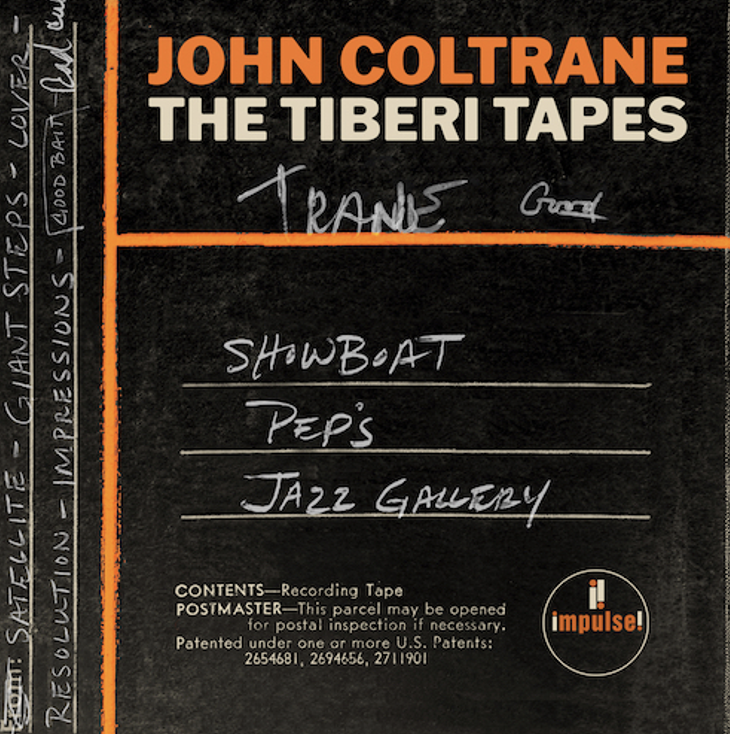
ARRIVING GLOBALLY NOVEMBER 6 VIA IMPULSE! RECORDS ON ALL FORMATS —
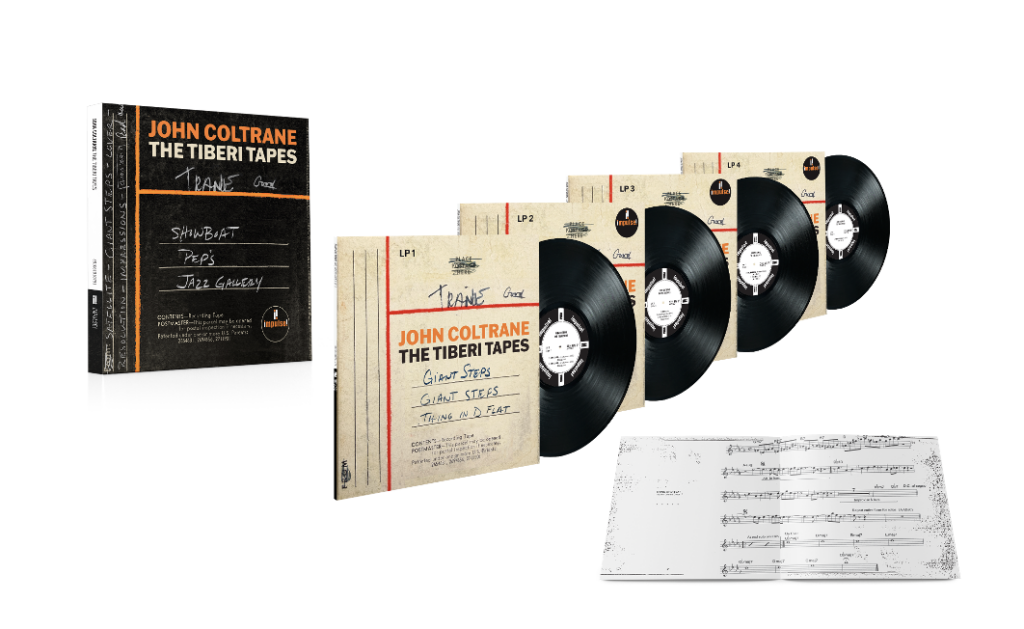
4-LP, 3-CD, DIGITAL — PRE-ORDER HERE
FABLED PRIVATE RECORDINGS MADE BY SAXOPHONIST FRANK TIBERI IN NEW YORK AND PHILADELPHIA IN THE EARLY 1960S FEATURING COLTRANE IN HIS PRIME
LISTEN TO “GIANT STEPS (226 BPM)” HERE AND WATCH THE VISUALIZER HERE
23 SEPTEMBER 2026 (TORONTO, ON) – Certain musical treasures reach us in raw form, their sonic anomalies inseparable from their history. Their true worth reveals itself in attentive listening. The Tiberi Tapes are such a treasure. Hidden away for more than six decades, these remarkable private recordings of John Coltrane capture the saxophonist in clubs in New York and Philadelphia during a pivotal period of artistic transformation, offering musical riches that transcend the limitations of the medium that preserved them.
Among the most fabled and mythologized recordings of the last 65 years, The Tiberi Tapes have long been the subject of rumor and intense speculation throughout the jazz world. Recorded by saxophonist Frank Tiberi beginning in 1960, the tapes document Coltrane on the bandstand, searching, experimenting and pushing his music forward in real time. Now, on what would have been Coltrane’s 100th birthday, Impulse! Records announces that these recordings will finally be heard by the public with the November 6, 2026 release of The Tiberi Tapes, a centerpiece of the year-long COLTRANE 100 centennial celebration. Pre-order The Tiberi Tapes here.
The story of The Tiberi Tapes begins as Coltrane was establishing himself as a bandleader and entering one of the most consequential periods of artistic development in modern music. Tiberi, an active member of Philadelphia’s music community, had become fascinated by Coltrane’s harmonic language. He owned Coltrane’s commercially released recordings, but increasingly heard something different when he experienced the saxophonist in clubs: a freedom, relaxation and inspiration that compelled Tiberi to understand the music more deeply.
“I had all of them,” Tiberi recalls of Coltrane’s albums in one of the essays written for the collection by acclaimed music historian Ashley Kahn. “To me they were not anywhere near the kind of playing and inspiration that he would display at a club.”
In the summer of 1960, Tiberi bought a Concertone TR-100 Transicorder, a portable reel-to-reel machine with a small condenser microphone, and began carrying it to Coltrane’s performances in Philadelphia and New York. Sitting among the audience, Tiberi kept the recorder in a cloth bag on his lap, running the microphone beneath his coat to capture the group directly or through a nearby speaker. Working with three-inch reels as Coltrane stretched performances to extraordinary lengths, Tiberi learned to change tapes by touch inside the bag, attempting to preserve as much of each performance as his modest equipment would allow.
His objective was never to make a record. It was to learn.
“My main purpose of recording him was to really, to get information and harmonic values, so that I could be able to really play myself,” Tiberi recalls. Once home, the tapes became a source of intense musical study, allowing him to return to Coltrane’s ideas, transcribe what he had heard and apply those discoveries to his own playing and, eventually, his teaching.
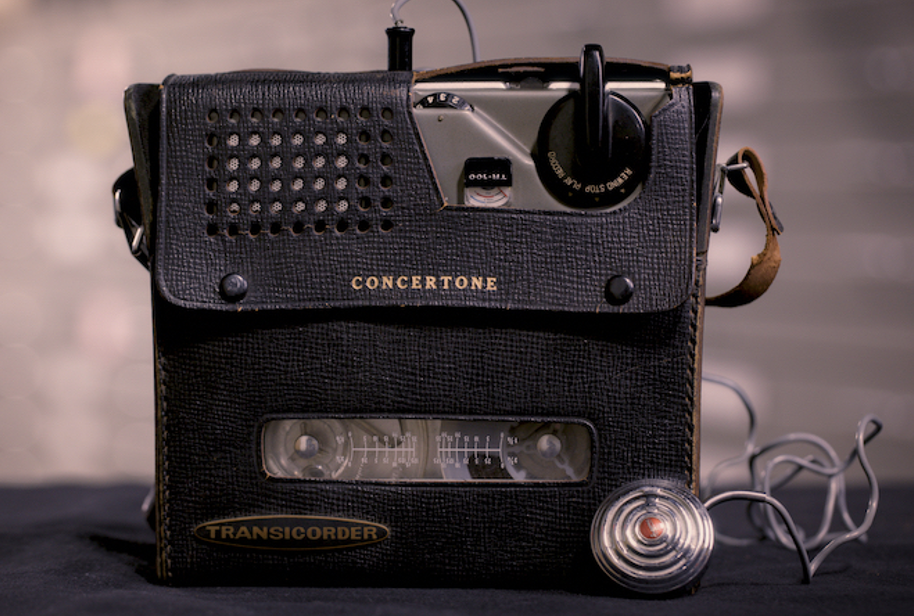
^exact model TR-100 recorder that Frank Tiberi utilized
Over the ensuing years, Tiberi continued to follow Coltrane from club to club, amassing an extraordinary private archive: more than 80 reels containing over 26 hours of music captured across dozens of performances in Philadelphia and New York City. Tiberi never intended to release the recordings. Their documentation was often minimal—some boxes carried dates, others lacked venue information, and only a handful identified every musician who performed. For decades, the tapes remained in Tiberi’s possession.
Yet they did not remain a secret.
As Coltrane’s stature continued to grow following his death in 1967, knowledge of Tiberi’s recordings traveled largely by word of mouth among saxophonists, students, collectors and Coltrane devotees. A select group of musicians were occasionally given a glimpse into the archive. The tapes became more heard about than actually heard, their existence acquiring an almost mythical status within the jazz community.
Now, more than six decades later, The Tiberi Tapes finally brings that music into the world.
The circumstances under which these performances were captured are audible in the recordings themselves. Tiberi was working with modest consumer equipment in crowded clubs, focused not on sonic fidelity but on preserving Coltrane’s playing. The audio is inconsistent; saxophone and drums can emerge more distinctly than bass and the lower registers of the piano. But to judge these tapes solely by conventional standards of recorded sound is to miss what they contain: a rare document of Coltrane creating in the environment where he felt some of his most inspired music occurred.
In a 1961 conversation with critic Ralph Gleason, Coltrane reflected on the difference himself: “Some of the best ones have been there, recently, on the job.” Of his performances in clubs, he added that they sounded better to him than what happened in the studio, “Maybe not in the sound or reproduction, but as far as the feeling of it.”
That feeling is at the heart of The Tiberi Tapes.
Across 11 selections, the collection offers a remarkable window into Coltrane’s musical development and the restless spirit of discovery that defined his performances. The set opens with two versions of “Giant Steps,” documented at strikingly different tempos of 226 and 262 BPM, and encompasses “Thing in D Flat,” “Lover,” “West 42nd St.,” “Impressions,” an untitled original in F minor, “Satellite,” “Good Bait,” “Resolution” and “It’s Easy to Remember.”
The Tiberi Tapes arrive on November 6, 2026, during a year in which the Coltrane Estate and partners around the world are marking the centennial of John Coltrane’s birth. The release stands at the heart of COLTRANE 100, a global celebration honoring an artist whose music permanently reshaped the language, ambition and purpose of modern music.
More than a historical artifact, The Tiberi Tapes offers the opportunity to encounter Coltrane in the act of becoming—working through musical possibilities in front of an audience, stretching familiar material into new territory and pursuing ideas with a freedom that could only exist in the moment. The technology that captured those moments was imperfect. The music was anything but.
Also available for preorder today and shipping in early 2027 is The Tiberi Tapes: The Complete Recordings, a hand-numbered collector’s edition limited to just 750 copies worldwide, featuring the complete Tiberi archive—more than 80 performances and nearly 26 hours of high-resolution audio—on a custom-designed USB drive, along with an exclusive collectible LP, a deluxe hardback book with expanded content and more. Pre-order here.
The COLTRANE 100 celebrations at Impuse! Records continue with two special offerings. Verve Record Club’s exclusive member release for November is Chasin’ the Trane: Copenhagen 1962.This captures John Coltrane’s Classic Quartet at a pivotal moment. With McCoy Tyner, Jimmy Garrison and Elvin Jones, Coltrane stands between the lyrical grace that brought him wider acclaim and the exploratory fire that had divided critics and audiences the previous year. Membership to the Verve Record Club is available here. Additionally, Essential John Coltrane, a limited-edition 2LP collection, celebrates the extraordinary legacy of ‘Trane and captures the remarkable range of his artistry— from the spiritual power of “A Love Supreme: Part I – Acknowledgement” and the timeless beauty of “In A Sentimental Mood” to landmark recordings including “My Favorite Things,” “Alabama,” “Crescent” and “Impressions.” Drawing together defining moments from across his career, Essential John Coltrane offers a powerful portrait of an artist who continually pushed jazz into new territory and whose music continues to inspire generations of listeners. Essential John Coltrane is available now, see here.
THE TIBERI TAPES — TRACKLIST
ABOUT JOHN COLTRANE
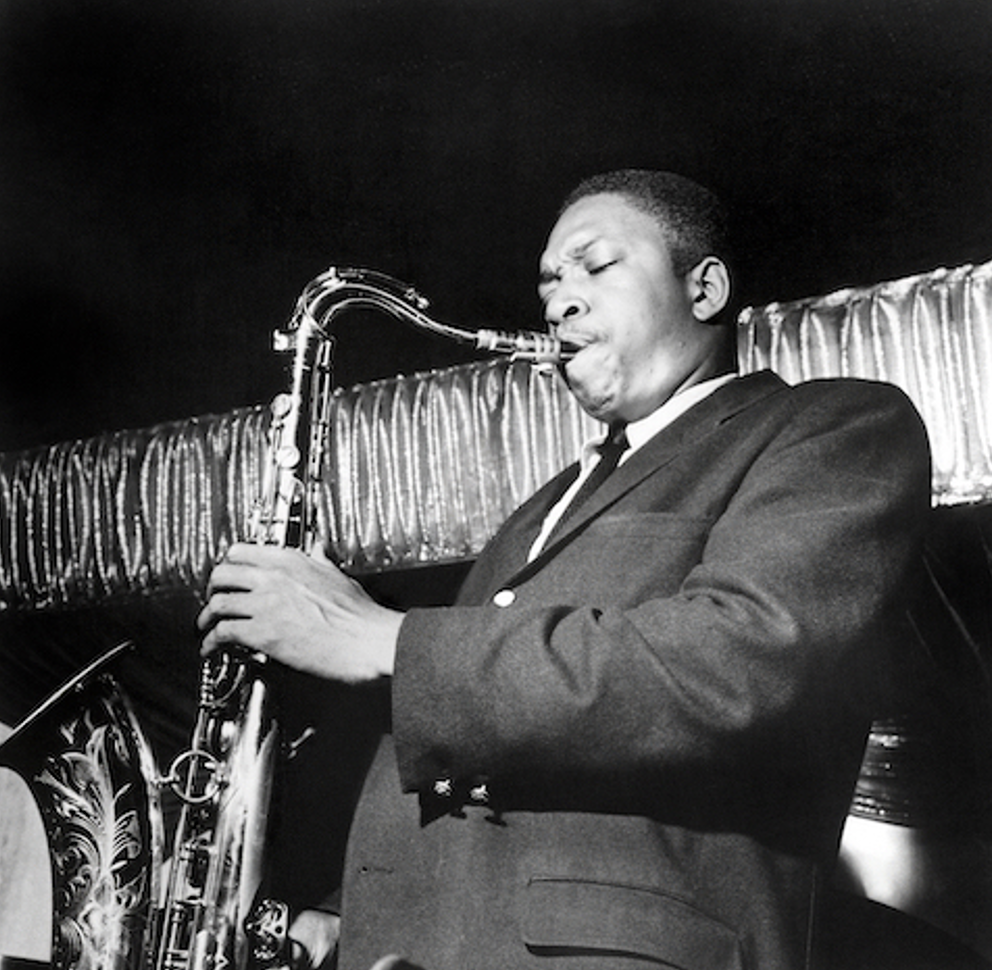
John Coltrane (1926–1967) was one of the most transformative artists in the history of modern music. A saxophonist, composer, and bandleader of singular vision, he expanded the expressive possibilities of jazz while establishing music as a vehicle for spiritual inquiry and human connection. His unmistakable sound and relentless curiosity placed him at the center of nearly every major stylistic shift in jazz during the mid-20th century.
During a concentrated decade of unprecedented creative output, Coltrane released 25 albums as a leader, forging a legacy defined by fearless exploration and emotional depth. His work bridged blues, bebop, modal jazz, and the avant-garde, influencing generations of musicians across jazz, rock, hip-hop, classical, and experimental music. Despite the near-mythic devotion his work inspires, Coltrane emphasized discipline, humility, and practice as the foundation of artistic excellence.
Since his passing, Coltrane’s stature has only grown. His recordings are preserved by the Library of Congress and studied worldwide as cornerstones of American music. His honors include a Pulitzer Prize Special Citation, a Grammy® Lifetime Achievement Award, multiple inductions into the Grammy Hall of Fame, and a U.S. commemorative postage stamp. Most recently the newly published Coltrane: The Definitive Visual Celebration of the Legend, edited by Ravi Coltrane, brings together never-before-seen photographs and essays by contributors including Carlos Santana, Patti Smith, and Dev Hynes. John Coltrane endures as a paragon of artistic courage and spiritual vision, and his music continues to speak—urgently and timelessly—to listeners around the world.