J BALVIN AND RYAN CASTRO UNLOCK MEDELLÍN’S NEW CODE ON OMERTA
WATCH “UNA A LA VEZ” HERE
OMERTA UNVEILS A 10-TRACK OPUS FEATURING GLOBAL COLLABORATIONS WITH DJ SNAKE AND ELADIO CARRIÓN
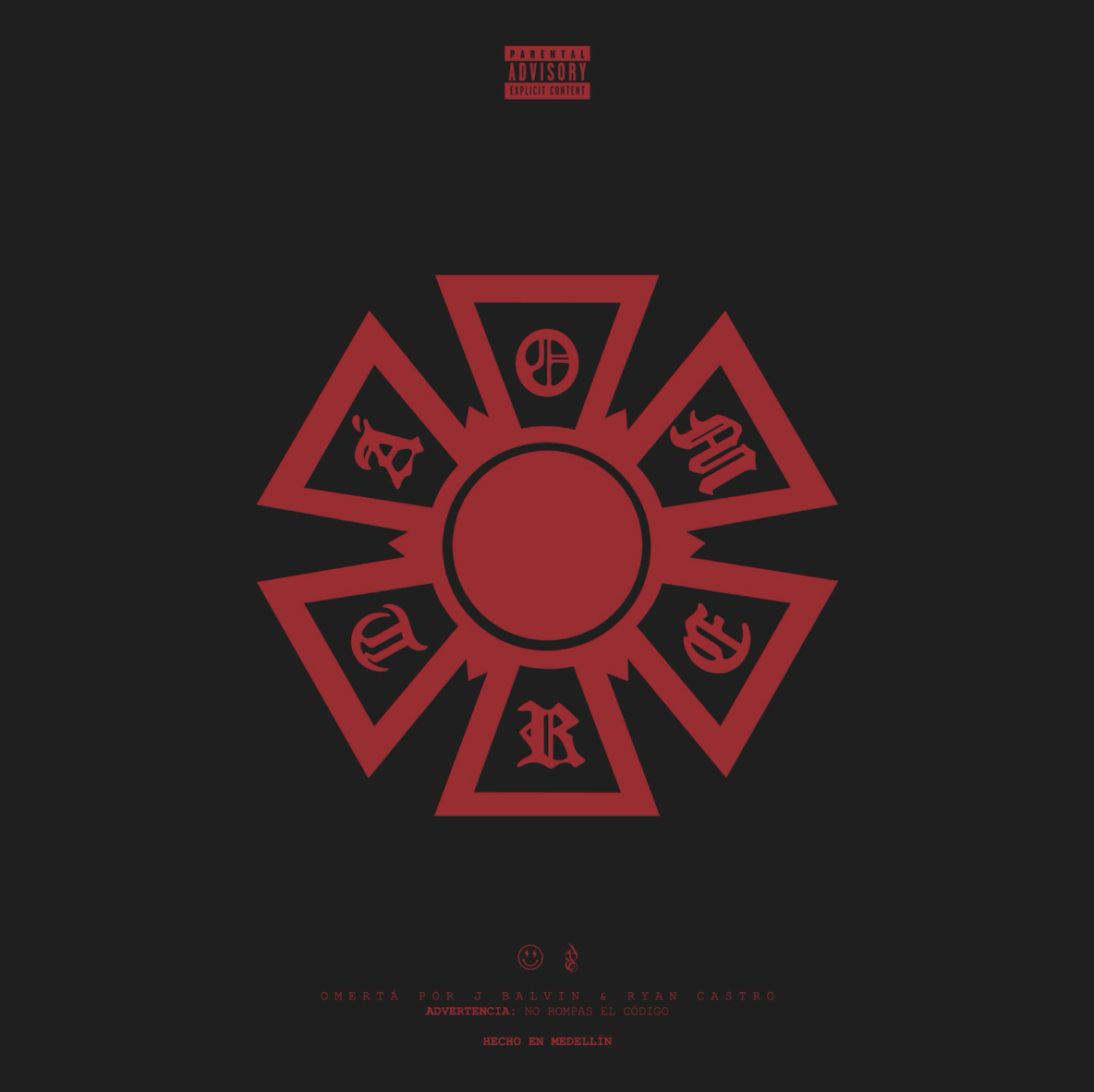
08 MAY 2026 (TORONTO, ON) – OMERTA has finally arrived as a landmark collaborative project between J Balvin and Ryan Castro, a 10-track opus born in the mountains of Medellín. More than a joint album, OMERTA operates like a coded language between two generations of Colombian music, where silence carries weight, loyalty is non-negotiable, and every decision is guided by a shared understanding that what is said once is binding forever. Listen to OMERTA here.
Rooted in the reinterpretation of the Italian “Omertà,” the album reframes the concept through a paisa lens, transforming it into a living philosophy shaped by Medellín’s neighborhood codes. Within this world, trust is not negotiated, it’s assumed; family is not a metaphor, instead it’s infrastructure; and music becomes the most honest way to document what cannot always be spoken directly.
The opening focus track, “Una a La Vez,” immediately sets the tone for the entire album. Built on a dancehall foundation with coastal percussion and hard-hitting kicks, the track moves with an effortless physicality that feels both intimate and expansive, carrying the sensation of heat on skin and movement without hesitation. There is no overthinking here, only rhythm and instinct, as both artists lean into a sound that feels alive on a track that dissolves distance between strangers on a crowded floor. Watch “Una a La Vez” here.
From there, “Dalmation” expands the sonic palette into something more otherworldly, opening with alien synth textures and bright marimba tones that frame reggaeton in a futuristic space without abandoning its roots. J Balvin moves with his signature ease, while Ryan Castro counters with a grounded, street-leaning presence. “Melo” pushes into tension and sensuality, driven by a light dancehall rhythm with darker, more experimental synth layers. Ryan Castro delivers with raw immediacy, while J Balvin stretches the energy into something more restrained and reflective. The recurring reference to NBA star LaMelo Ball turns the hook into a double entendre, blending sensual bravado with a sports-inspired metaphor for scoring and confidence. On “GWA,” the energy shifts into full street mode, leaning into gritty trap percussion with sharp hi-hats and an unrelenting pace that mirrors movement through city streets, as the G-Wagon motif becomes both aesthetic and attitude, with Eladio Carrión entering with a commanding presence that cuts through the track without disrupting its flow.
Tracks like “Medetown,” “Bengali,” and “Pal Agua” dissolve into a shared coastal atmosphere, where reflection and and sun-soaked release coexist all while J Balvin and Ryan Castro transform memory and rhythm, and rising heat into a continuous summer state rather than separate moments. “Viernes” carries a lighter romantic tension, unfolding over soft guitar strums and a tropical reggaeton feel. It’s about chasing a muse out in the night, hoping to catch them somewhere between movement and chance, where timing matters as much as intention. On “Tonto,” DJ Snake stretches the OMERTA world outward without diluting its core identity. Warped synth layers subtly reshape the atmosphere, while J Balvin and Ryan Castro stay locked into a shared cadence.
The SOG-produced closing track, “OMERTA,” functions as the album’s final statement and emotional anchor. Moving through laid-back hip hop textures and restrained instrumentation, the song feels like reflection after impact. This is where OMERTA’s code becomes explicit rather than implied. J Balvin delivers a measured message of trust and caution, reminding Ryan Castro: “Ryan no te dañes” (Ryan, don’t get corrupted), a line that carries the weight of experience and survival in an industry that often reshapes those who enter it. His verse reads less like advice and more like a passing of responsibility, grounded in loyalty over hierarchy. Ryan Castro responds with equal clarity, emphasizing discipline, consistency, and focus despite pressure. Delivered by J Balvin, the chorus: “All eyez on me, Aprendan todos de mi, Follow me rookie,” reframes leadership as visibility and example, drawing a subtle line to legacy without relying on imitation. It becomes less about instruction and more about presence, how to exist in the industry without losing identity.
Across OMERTA, J Balvin and Ryan Castro construct something that feels larger than collaboration. The album reflects a generational dialogue shaped by Medellín’s codes and expanded through global reach, where instinct meets discipline and silence becomes its own form of language. It is not simply a collection of songs, but a structured world with its own ethics, sound, and memory.
J Balvin continues to stand as one of the defining global forces in Latin music, not only for his reach, but for his ability to recognize cultural shifts before they fully surface. That perspective has consistently expanded the space for Latin music on a global scale, creating room for new voices to exist with fewer limitations.
Through OMERTA, that influence becomes shared rather than singular. It is not a passing collaboration, but an alignment of vision between two artists shaped by the same city but arriving from different moments in its musical evolution. In doing so, OMERTA does not just document a code. It reinforces one.
OMERTA TRACKLIST:
1. “Una a La Vez”
2. “Dalmation”
3. “Melo”
4. “GWA” featuring Eladio Carrión
5. “Medetown”
6. “Bengali”
7. “Pal Agua”
8. “Viernes”
9. “Tonto” with DJ Snake
10. “Omerta” featuring SOG